
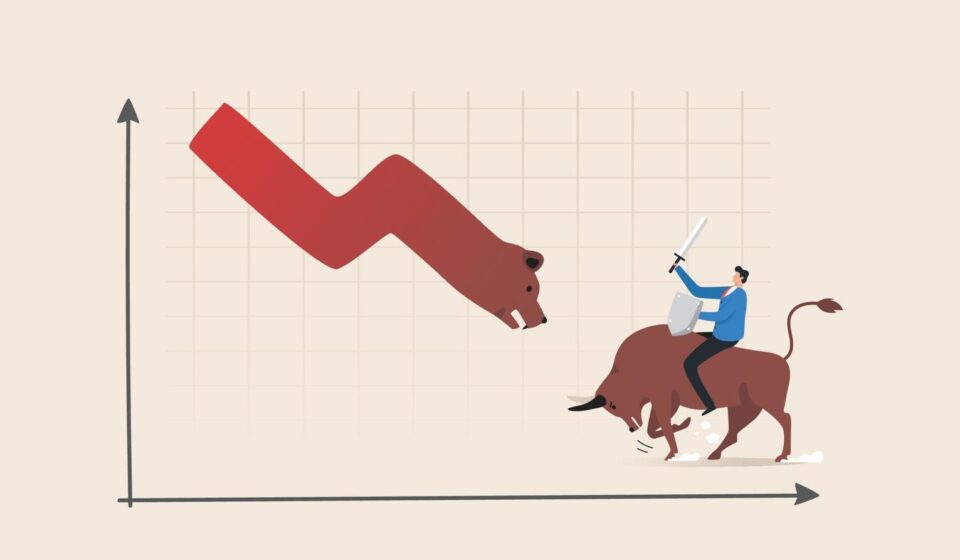

If you follow the stock market, you’ve probably heard the terms bull market and bear market. These terms describe the overall direction of the market and play a major role in how investors make decisions.
Understanding these trends can help you stay calm, avoid mistakes, and invest more confidently.
🐂 What Is a Bull Market?
A bull market is a period when stock prices are rising consistently.
This usually happens when:
- The economy is growing
- Companies are performing well
- Investor confidence is high
During a bull market:
- Stock prices trend upward
- Investors are optimistic
- Buying activity increases
This is often seen as a good time for long-term investors, as their investments grow in value.
🐻 What Is a Bear Market?
A bear market is the opposite—it’s when stock prices fall over a sustained period.
It usually occurs when:
- The economy is slowing down
- Company earnings decline
- Investor confidence drops
During a bear market:
- Stock prices decrease
- Fear and uncertainty increase
- Selling activity rises
While it may seem negative, bear markets are a natural part of the market cycle.
📊 What Causes Market Trends?
Market trends don’t happen randomly. They are influenced by several factors:
- Economic conditions (growth or recession)
- Interest rates and inflation
- Global events and political stability
- Company performance and earnings
These factors shape investor sentiment, which ultimately drives market direction.
⚖️ How Investors React
Investor behavior differs in each market condition:
In Bull Markets:
- Investors are confident
- More people invest
- Risk-taking increases
In Bear Markets:
- Investors become cautious
- Many sell to avoid losses
- Fear drives decisions
Understanding this behavior helps you avoid following the crowd blindly.
🧠 Smart Strategies for Both Markets
Instead of reacting emotionally, smart investors adjust their strategy:
During Bull Markets:
- Stay invested but avoid overconfidence
- Don’t chase overpriced stocks
- Focus on quality investments
During Bear Markets:
- Avoid panic selling
- Look for undervalued opportunities
- Continue investing if possible
Both markets offer opportunities—it depends on how you approach them.
⏳ Why Long-Term Investors Stay Calm
Short-term market movements can be unpredictable, but long-term trends are more stable.
Historically:
- Markets go through cycles
- Bear markets are followed by recoveries
- Long-term investors benefit from overall growth
Staying invested through ups and downs often leads to better results than trying to time the market.
🔄 Market Cycles Are Normal
No market stays bullish or bearish forever.
The cycle typically looks like:
- Growth (Bull Market)
- Peak
- Decline (Bear Market)
- Recovery
Understanding this cycle helps you stay prepared instead of surprised.
🔥 Final Thoughts
Bull and bear markets are natural parts of investing. They are not something to fear—but something to understand.
To invest wisely:
- Stay calm during market changes
- Avoid emotional decisions
- Focus on long-term goals
- Look for opportunities in every phase
The market will rise and fall—but disciplined investors continue to grow. 📈